Consignment stock includes depleting stock that does not have to be paid for (to the supplier) until the stock is invoiced to a customer.
 |
Note: Consignment stock can only be sold, transferred or returned to vendor. It cannot be stock adjusted. |
A Consign.In purchase order is used to receive the stock quantity into Jim2. Costs are allocated once a subsequent Consign.Buy purchase order is entered and moved to FINISH status.
|
Note: There is no impact on the general ledger from the Consign.In order. The Consign.Buy order does impact the general ledger. |
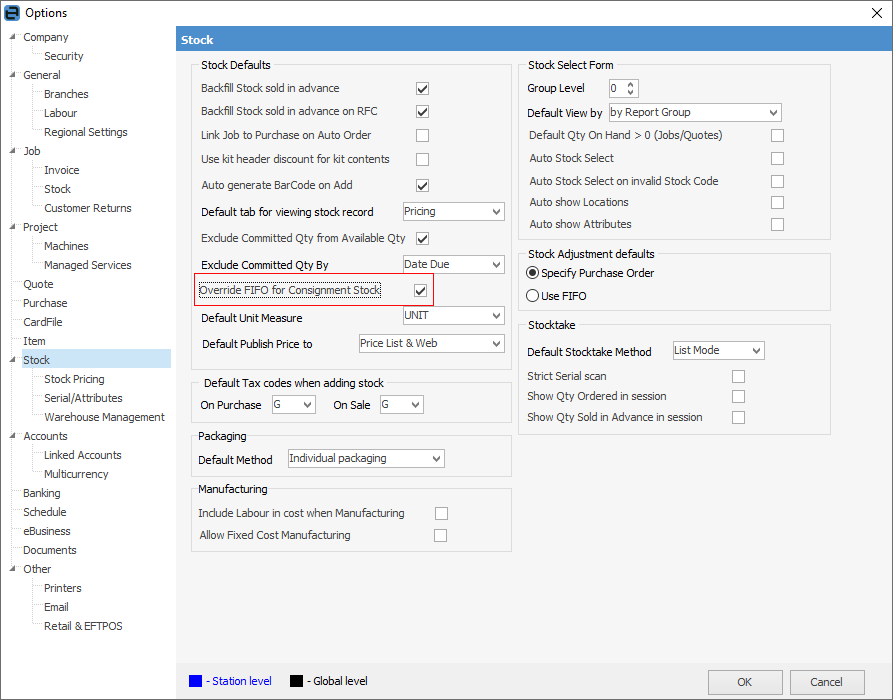
Jim2 uses FIFO (First In, First Out) to allocate stock costs to jobs. Where the same stock code can be purchased on a Consign In purchase order, as well as a normal purchase order, users may want to utilise the normal quantity of stock before using the consignment stock. In this circumstance, the setting (via Tools > Options > Stock) should be set to:
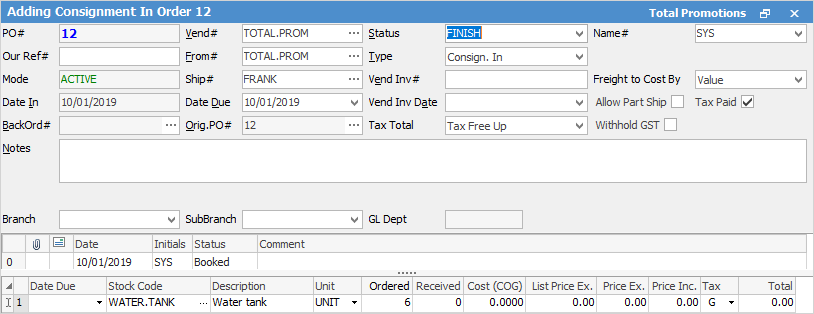
Consign.In puts the products into stock for selling.
Once an invoice is received for the goods, enter a Consign.Buy order to purchase the stock that has been sold.
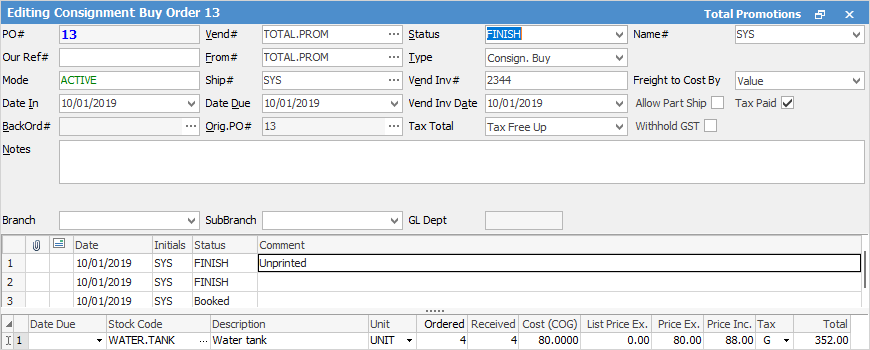
The Consign.Buy would match the invoice from the supplier.

A water tank supplier drops off 6 models of water tanks, each available for sale but not to be invoiced by the supplier until sold. The following process occurs: ▪Enter a Consign.In purchase order (on Received or Finish status) for six tanks. The dollar amount at this stage is of no importance, as there is no impact on the general ledger with a consign in purchase order, so $0 is acceptable. When changing the Status to FINISH, you will need to enter a Vend Inv# and Vend Inv Date. You can enter anything in the Vend Inv# field if you don't actually have an invoice yet. ▪Sell two tanks to customers. Jim2 understands there were originally six, and now there are only four. 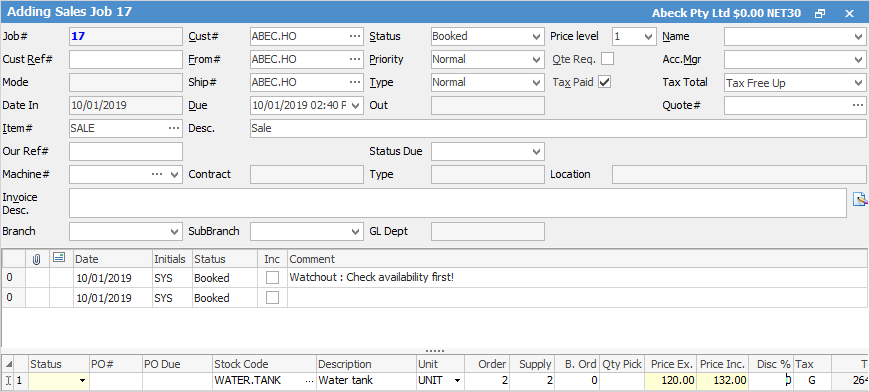 ▪Sell two more tanks to customers. Jim2 understands there are only two tanks remaining. ▪The supplier invoices for four tanks. Raise a Consign.Buy purchase order for four tanks including the amount paid, which then finalises COGS for the tanks and adds to the creditor balance. |
Prepaid phone charge cards, where there are numerous depleting stock codes, however invoices are received only as they are sold. The following process occurs: ▪Consign.In purchase order (on Received or Finish status) for 200 cards. 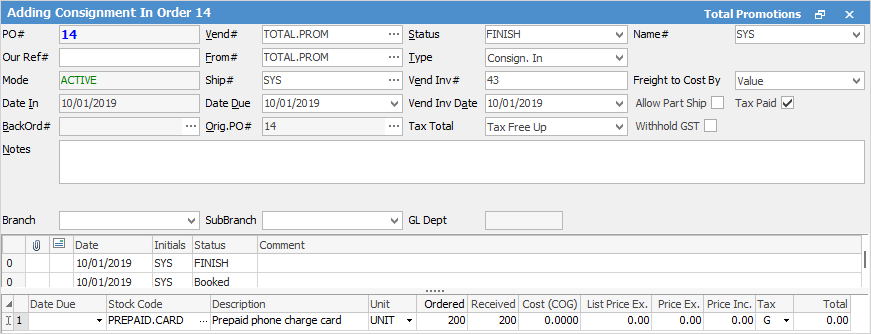 ▪Jim2 understands there are 200 of each card in stock. ▪Sell 25. 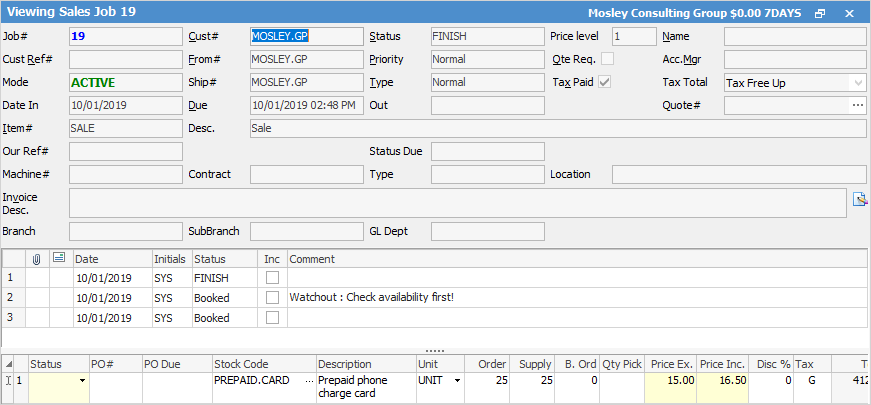 ▪Receive an invoice from the supplier for the 25 sold. ▪Raise a Consign.Buy purchase order for the invoiced number. 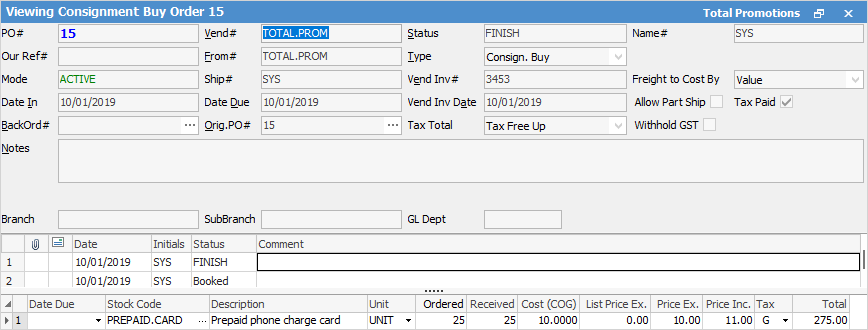
This system also works for dial-time type transactions for mobile phone businesses, for instance.
A Consign.Buy can only ever buy as many units as are on the Consign In. |
Further information